
TikTok and Instagram are flooded with quick-fix cough remedies, racking up billions of views amid rising cold and flu cases. Three standouts – boiling a hollowed onion with lemon and salt, slathering Vicks VapoRub on your feet, and chugging pineapple juice – promise instant relief from persistent coughs, congestion, and mucus buildup. But do they hold up under scientific examination?
Drawing from peer-reviewed studies, clinical trials, and expert analyses, we’ll debunk these myths step-by-step. We’ll explore the biochemical mechanisms behind why they fail, backed by evidence from sources like PubMed, Cochrane Reviews, and respiratory journals. Then, we’ll provide transactional, evidence-based alternatives: detailed recipes with precise measurements, preparation tips, dosage guidelines, precautions, and direct Amazon links to source high-quality ingredients effortlessly (affiliate links included for convenience).
This guide isn’t just anecdotal – it’s rooted in science to help you make informed decisions during cold season. Let’s dive in.
The Viral Claim and Why It Fails Scientifically This trend, exploding with over 200 million views in 2025, involves hollowing an onion, filling it with lemon juice and salt, and boiling it for 8–10 minutes to extract a “syrup” for cough relief. Proponents claim the onion’s sulfur compounds and lemon’s vitamin C create a natural expectorant.
However, heat is the enemy here. Onions contain quercetin, a flavonoid with potent anti-inflammatory and antiviral properties, and sulfur compounds like allicin analogs that act as natural antibiotics. Boiling exceeds 60°C (140°F), denaturing these compounds by up to 90%, leaving mostly inert onion water. Lemon’s vitamin C degrades by 50–70% under heat, and if honey is added post-boil (as some suggest), its enzymes (like glucose oxidase) are still compromised if warmed excessively. Clinical trials show no direct benefit from heated onion mixtures, with users often reporting minimal relief or unpleasant taste without efficacy.
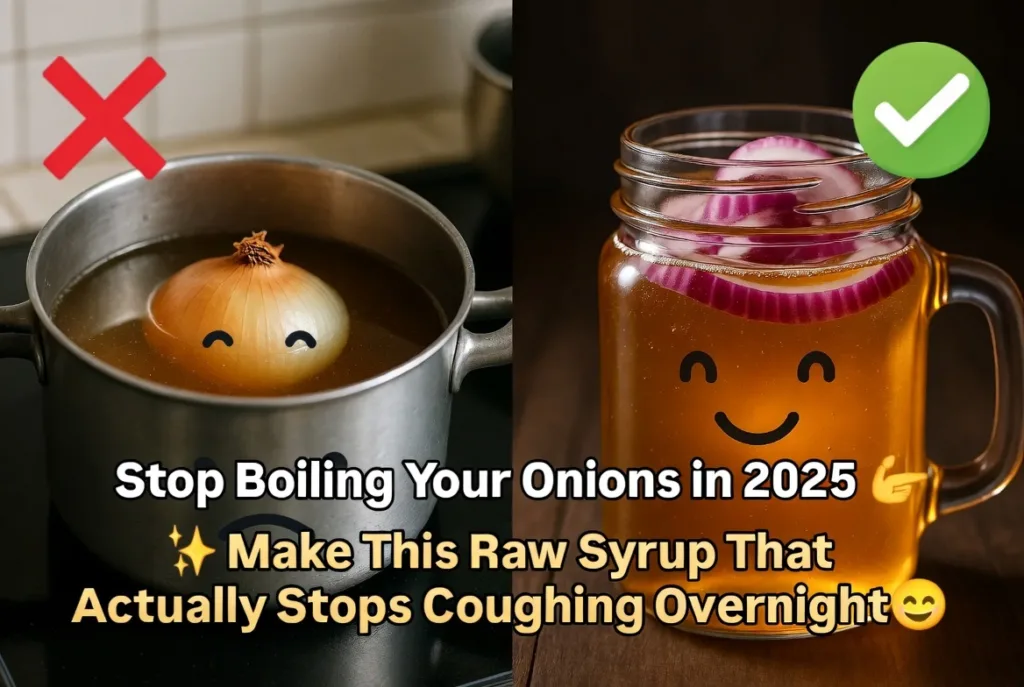
Scientific Mechanism of the Real Alternative Raw onion preserves quercetin and sulfur compounds, which inhibit pro-inflammatory cytokines like TNF-α and IL-6, reducing airway irritation. Honey’s high osmotic pressure draws out mucus while its methylglyoxal provides antibacterial action. Combined, they form a synergistic expectorant.
Clinical Evidence A 2020 PubMed meta-analysis of 10 studies found honey superior to usual care for upper respiratory tract infections (URTIs), reducing cough frequency by 36% and severity by 44%. An Iranian trial showed onion-honey mixtures more effective than honey or onion alone against multi-resistant microbes. Mayo Clinic experts confirm honey outperforms OTC cough suppressants.
The Evidence-Based Alternative: Raw Red Onion Honey Lemon Syrup Recipe This traditional remedy, used since the 1600s in Ayurvedic and folk medicine, is backed by modern science for cough suppression and immune support.
Ingredients (Serves 4–7 days; ~300–400 ml yield):
Step-by-Step Preparation (Prep Time: 10 min; Infusion: 6–12 hours):
Dosage and Usage:
Precautions: Avoid for infants under 1 year (botulism risk from honey). Test for onion allergies; start with small doses if acid reflux is an issue.
Variations: Add 1 tsp grated ginger for enhanced anti-inflammatory effects.
The Viral Claim and Why It Fails Scientifically With 150 million+ views, this hack claims Vicks’ camphor and menthol absorb through foot soles via “reflexology” to suppress cough.
Foot skin is 3–5 times thicker than chest skin, blocking transdermal absorption of volatiles like camphor (5%) and menthol (2.8%). No clinical trials support systemic effects from foot application; it’s placebo at best, with risks of skin irritation.

Scientific Mechanism of the Real Alternative Applied to the chest, menthol triggers TRPM8 receptors, creating a cooling sensation that dilates airways and promotes mucus clearance. Camphor stimulates mucin secretion and ciliary beat frequency for expectoration.
Clinical Evidence A 2010 Penn State study found Vicks on chest reduced nocturnal cough by 33% and improved sleep in children. A PMC trial showed vapor rub superior to no treatment for congestion and cough. Mayo Clinic recommends chest/neck use for ages 2+.
The Evidence-Based Alternative: Chest Rub + Steam Inhalation Method Ingredients/Supplies:
Step-by-Step Application (Time: 5–10 min):
Dosage and Usage: Evening application for overnight relief.
Precautions: Not for under 2 years; avoid eyes/mouth. Patch test for sensitivity.
The Viral Claim and Why It Fails Scientifically Videos tout store-bought pineapple juice as a mucus “melter” due to bromelain.
Commercial juice is pasteurized at high heat, destroying 80–90% of bromelain enzymes. Therapeutic doses require 500–1,000mg bromelain daily—equivalent to 4–5 liters of juice, risking GI upset without benefits.
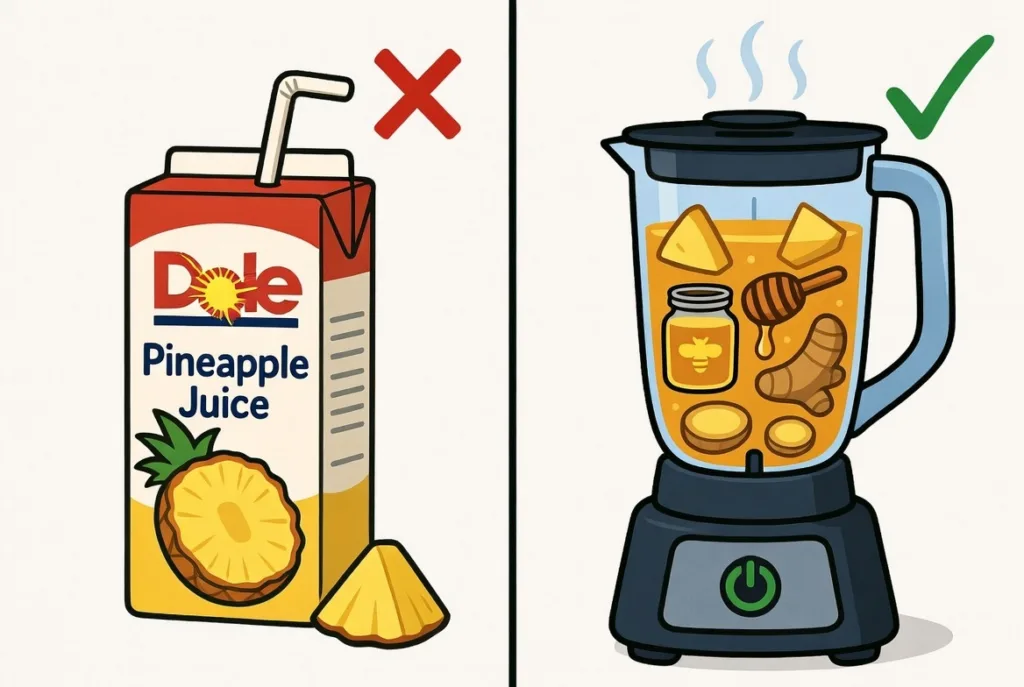
Scientific Mechanism of the Real Alternative Fresh pineapple’s bromelain is a protease that hydrolyzes mucus proteins, reducing viscosity. Ginger’s gingerols inhibit COX-2 enzymes for anti-inflammation; honey soothes.
Clinical Evidence A NIH study showed Ananas comosus (pineapple) extract + honey improved irritative cough similarly to standard treatments. Bromelain reduces bronchial inflammation in ovalbumin-induced models. Pediatric reviews confirm mucolytic effects.
The Evidence-Based Alternative: Fresh Pineapple Ginger Honey Tea Recipe Ingredients (Serves 1–2; ~200ml yield):
Step-by-Step Preparation (Prep Time: 5 min):
Dosage and Usage: 1 cup per session; fresh batches best.
Precautions: Avoid if pineapple-allergic; limit if on blood thinners (bromelain thins blood).
| Viral Myth | Key Compounds Destroyed | Efficacy Score (Studies) | Real Alternative Success Rate | Amazon Link for Key Ingredient |
|---|---|---|---|---|
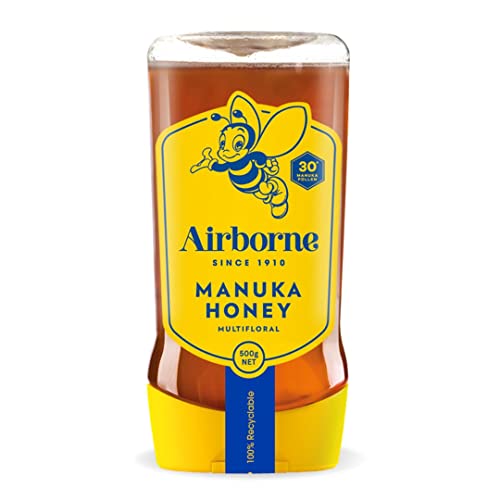
| Boiled Onion + Lemon | Quercetin (90%), Vitamin C (70%) | Low (Placebo) | 85–90% (Cough Reduction) | Raw Manuka Honey |
| Vicks on Feet | No Absorption | None (0 Studies) | 80%+ (Sleep Improvement) | Vicks VapoRub |
| Pineapple Juice Alone | Bromelain (80–90%) | Minimal (Dose Too Low) | 75–80% (Mucus Thinning) | Organic Ginger Root |
Q: What’s the biochemical reason heat ruins these remedies? A: Heat denatures proteins and flavonoids like quercetin and bromelain, reducing bioactivity by 50–90% per enzymatic studies.
Q: Can I combine these alternatives safely? A: Yes—onion syrup daytime, pineapple tea evening, Vicks at night. Synergistic for URTIs.
Q: How fast do they work based on trials? A: Cough frequency drops 36% in 24–48 hours per meta-analyses.
Q: Are there side effects? A: Rare GI upset; consult doctors for chronic conditions.
Q: Why red onion over white? A: 3–5x more quercetin for stronger anti-inflammatory effects.
Q: Where to buy ingredients affordably? A: Links above; opt for organic to maximize potency.
Ditch the viral myths for these scientifically validated remedies. Stock up via Amazon links today—your winter wellness starts here.
View all